
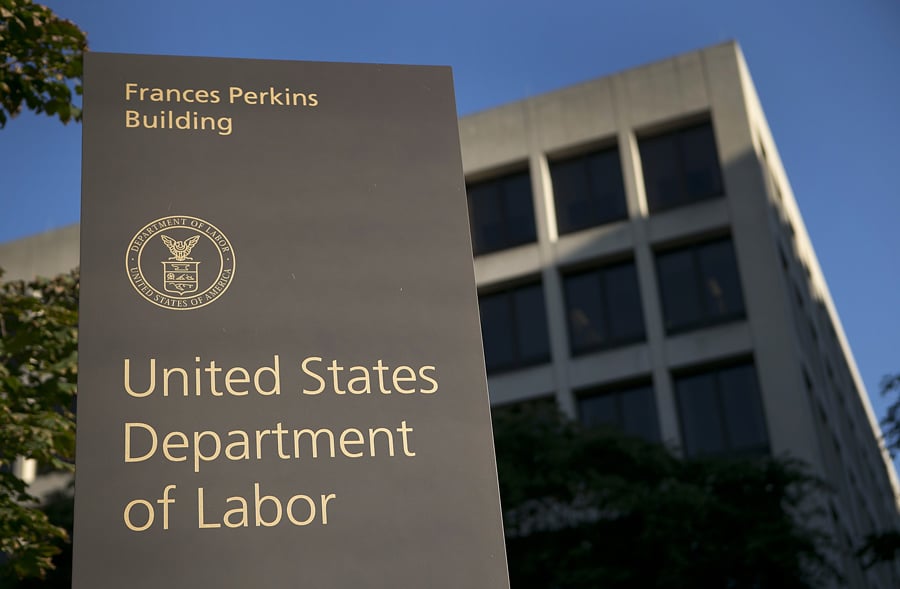
A federal judge in Texas has vacated the Labor Department’s 2024 fiduciary rule for retirement advice, rolling back a key Biden-era attempt to expand when brokers and insurance agents must act as fiduciaries to retirement investors.
In a final judgment issued March 17, the US District Court for the Northern District of Texas set aside the Retirement Security Rule: Definition of an Investment Advice Fiduciary, along with a package of related amendments to prohibited transaction exemptions governing commissions and other conflicted compensation.
The Texas court decision comes roughly four months after the DOL under the current Trump administration moved to end its defense of the contentious regulation. Had it passed, it would have expanded the definition of a fiduciary to cover investment advisors guiding 401(k) rollovers and small employer plans.
The ruling in the long-running dispute – launched by a coalition led by the American Council of Life Insurers in 2024 – grants the plaintiffs’ unopposed motion for final judgment and wipes the rule, along with related prohibited transaction exemptions, from the books.
The Insured Retirement Institute, which was part of that group, framed the outcome as a win for retail investors seeking access to commission-based advice and annuities.
“Consumers no longer face the threat of losing access to their choice of professional financial guidance or retirement products due to a poorly crafted, unnecessary Department of Labor regulation,” Wayne Chopus, president and chief executive of the IRI, said in a statement Tuesday. “We said from the beginning that the DOL regulation was not needed, and the court’s decision validates our view.”
In a separate statement, the Securities Industry and Financial Markets Association and the Financial Services Institute said the 2024 rule “exceeded the DOL’s statutory authority and was arbitrary and capricious.” They added that the order “ensures that financial advisors can continue to provide the services best suited for each individual client.”
The 2024 rule was the department’s second attempt in roughly a decade to broaden the fiduciary definition for retirement advice under the Employee Retirement Income Security Act. An earlier 2016 rule was struck down by the Fifth Circuit Court of Appeals in 2018, which found that version arbitrary and capricious and beyond the agency’s authority.
Detractors from the industry argued that the 2024 iteration suffered from similar legal flaws and would once again disrupt access to commission-based products, particularly for smaller retirement accounts.
The IRI pointed to a 2017 Deloitte study estimating that more than 10 million smaller retirement accounts, holding over $900 billion in assets, lost access to preferred financial professionals in the wake of the 2016 rule.
Jason Berkowitz, the group’s chief legal and regulatory affairs officer, said the now-vacated rule “would have made it harder for millions of Americans to access the financial guidance and retirement products they rely on to prepare for retirement,” adding that existing standards from the Securities and Exchange Commission and state insurance regulators already “protect retirement savers without limiting their access to professional advice.”
Chopus said that with two one-size-fits-all fiduciary frameworks now vacated by federal courts in the past decade, the trade group hopes “this issue is now resolved” and that consumers will retain broad access to different types of financial guidance and retirement products.

South Carolina and Bay Area advisory teams join the WPCG-backed national platform as RIA dealmaking hits new highs.

The deal deepens the Kansas-based RIA giant's push into institutional consulting after a year of acquisitions spanning insurance, retirement and cross-border wealth work.

From M&A matchmaking to embedded advisor intelligence, third annual awards spotlights AI governance and data unity over feature-heavy platforms.

New AssetMark research shows AI has moved from experiment to expectation and firms that lag on capabilities risk losing advisors.

Three advisors focused on retirement income distribution leave Wells Fargo for LPL's broker-dealer and RIA platforms.
Northern Trust’s Ken Lassner shows advisors how to convert volatility into after-tax portfolio gains
Dan Biagini of American Equity says the steady decline of pensions, longer lifespans and a reset in interest rates are rewriting how advisors build retirement income

