
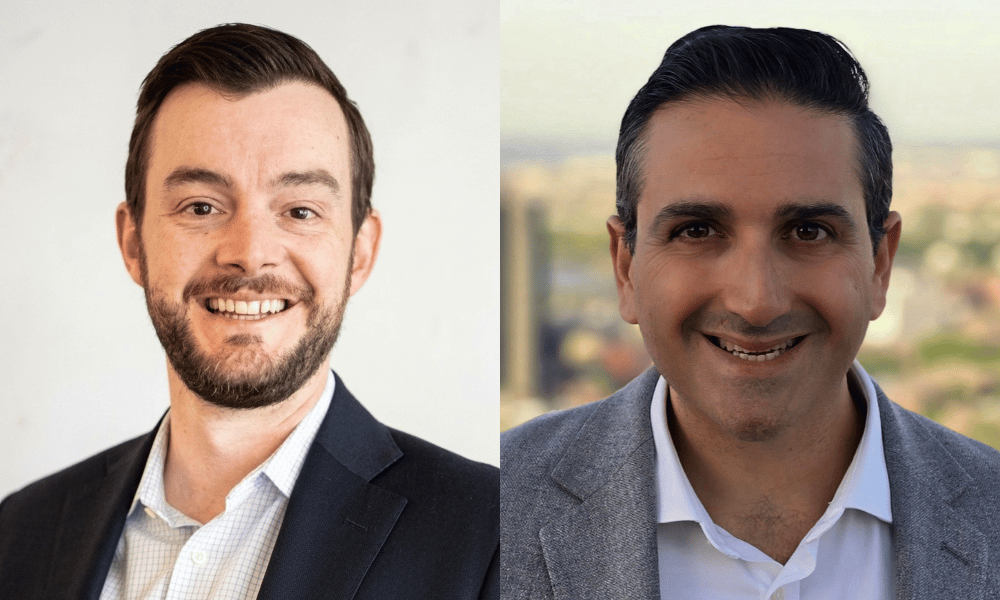
Apollo’s investment in Focus Financial Partners could help wake a sleeping giant in the RIA acquisition market, former Focus M&A executive Ryan Halls tells InvestmentNews.
Focus announced Nov. 16 that it had signed a definitive agreement under which funds managed by affiliates of Apollo will provide strategic capital to the RIA aggregator. Bloomberg reported that Apollo is investing about $2.5 billion in a deal valuing Focus at roughly $21 billion including debt.
Halls, now co-founder and managing partner at M&A advisory firm Hue Partners, spent nearly five years at Focus as vice president of M&A and relationship management before leaving in February 2024.
“Focus has been relatively quiet on the M&A front while focusing on internal integration,” Halls told InvestmentNews. “Once that work is behind them, they could once again be an 800-pound gorilla in the acquisition market, although they’ll likely need increasingly larger acquisitions to meaningfully move the needle.”
Throughout 2024, Focus merged partner firms within its network to create internal wealth hubs, culminating in a January 2025 rebrand that helped centralize the firm. As part of that effort, The Colony Group, Buckingham Strategic Wealth and the firms that had merged with them began operating as Focus Partners Wealth. That hub has continued to buy selectively, including Los Angeles-based Churchill Management Corp., with $9.4 billion in client assets, in May 2025.
"Focus has evolved from a collection of largely independent partner firms into a much more unified, centralized platform. The opportunity today is not just scale, but the ability to leverage best practices, drive operational efficiencies, and create organic growth across the organization," said Halls. "The addition of Apollo alongside CD&R and Stone Point further reinforces the appeal of that model."
Private equity firms Clayton, Dubilier & Rice and Stone Point Capital, which took Focus private in a roughly $7 billion deal in 2023, will remain controlling investors after the Apollo deal, which is expected to close in the first quarter of 2027. More than 850 employees will continue to hold ownership stakes in Focus, which reported more than $550 billion in advised billable assets as of June 30, 2026.
Eric Amar, founder and CEO of New York-based RIA investor Accelerated Wealth Partners, previously spent about a decade at Focus, most recently as chief growth officer. Amar said some of the changes CD&R made were needed to get Focus to this point.
“Part of the Focus model was that the individual firms were retaining EBITDA and earnings into their management companies, and so part of what CD&R did by creating these integrated models was to buy out more of these earnings,” Amar said. "You have one marketing budget instead of 90 small ones. You have one technology stack instead of 90 small. So you have the ability through scale to use your dollars more effectively."
According to Amar, the consolidation also tied the leaders of Focus’s partner firms more closely to the parent company’s fortunes.
“It realigned the incentives between Focus and the underlying firms by having them be more equitized into the overall company,” he said. “The leaders of these companies now have a lot of their net worth tied to the Focus stock, which was not really the case at the end of our public adventure. So that was very positive from a behavioral perspective.”
Focus has had three CEOs since its 2023 take-private. Founding CEO Rudy Adolf departed that year, and CD&R operating partner Dan Glaser served as interim CEO until Michael Nathanson, previously CEO of The Colony Group, was named to the role in April 2024.
In December 2025, Focus announced that Nathanson would become chairman and that president Adam Birenbaum, who had led Buckingham Wealth Partners, would succeed him as CEO effective Feb. 1, 2026. Focus called it a succession plan, but some industry sources questioned the abrupt timeline, which gave the market about seven weeks of public notice.
Weeks before that announcement, Nathanson told InvestmentNews at Schwab Impact 2025 in Denver that organic growth had been a challenge for Focus to articulate as a public company, and that the aggregator expected typical organic growth rates of 5% to 7%.
“We were effectively an association of 90 firms, and I think the markets looked at it that way,” Nathanson said at the time.
“Focus has gone from roughly 90 partner firms to 55, with many of its largest businesses now consolidated," said Halls. "That integration is incredibly meaningful and, in many ways, represents the realization of CD&R’s original thesis. The value today is not simply the sum of those businesses, but the ability to operate them as one organization while continuing to drive organic and inorganic growth.”
Amar, whose firm has backed RIAs including Pallas Capital Advisors and Brooklyn Fi, said he sees Focus’s organic growth as being a priority factor behind the Apollo investment.
“I believe that the investment in organic growth, in lead generation channel, and the outcomes getting them to whatever organic growth they have, I believe that’s the only reason Focus transacted,” said Amar.
“I personally believe that 99% of the reason this transaction happened is organic growth, because you can have all the cost synergies in the world, all the integration in the world,” Amar added. “If your organic growth is zero, it’s not like you don’t have a good price; it’s that the firm doesn’t transact. And we’ve seen that with other large aggregators that haven’t transacted.”
For sellers across the broader RIA M&A market, Halls described the lift from Focus’s reported $21 billion valuation as an indirect ripple effect.
“Rising tides lift all boats, but probably more indirectly than people think,” Halls said. “Higher valuations for the largest platforms give those businesses greater financial flexibility to pursue acquisitions at higher transaction values while maintaining attractive economics. That creates a positive ripple effect throughout the RIA M&A market.”

DeepVest, Asset-Map and Aidentified launch automation that spots household gaps, wealth events and portfolio triggers for advisor sign-off

Eddie Brown says RIA executives need AI built for strategy and execution, not just advisor productivity

Independent advisors in Colorado, Texas and Arkansas join larger wealth management platforms through acquisitions and partnerships

The enforcement division wanted a full bar - the Commission went lighter

Welch brothers’ 93 Financial Group gives the Osaic-owned RIA a fifth greater Boston office, days after a $1.6B triple acquisition
Advisors are broadening the conversation beyond savings to help clients prepare for the realities of longer lives
Growing wealth, evolving priorities, and untapped opportunities are reshaping how women approach long-term investing.

